
by EricThompson | May 5, 2023 | Uncategorized
Chameleons are unbelievable reptiles, known for their color-changing crystal skin, independently moving eyes, and long, super-fast tongues. Now, we will discuss the main reason why they have long tongues and delve into the interesting features behind their impressive projectile-feeding technique.
Table of Contents
An Overview of Chameleon Species
Chameleons have developed to live in many ecosystems around the globe. Their unique habitats and ecosystems caused them to develop highly specific and unique traits to survive, from deserts to rainforests. The most accessible and easy to find chameleons for pets are:
- Veiled Chameleon (Chamaeleo calyptratus)
- Panther Chameleon (Furcifer pardalis)
- Jackson’s Chameleon (Trioceros jacksonii)
- Senegal Chameleon (Chamaeleo senegalensis)
The Anatomy of Chameleon Tongues
Chameleon tongues consist of three main components:
- Hyoid bone: A U-shaped bone at the base of the tongue that provides support and attachment for muscles.
- Tubular muscle: This muscle surrounds the hyoid bone and contracts to propel the tongue forward.
- Bulbous tip: Covered in sticky mucus, this part of the tongue is responsible for capturing prey.
The Mechanics of Chameleon Tongue Projection
Chameleons can project their tongues at lightning-fast speeds, often reaching their target in as little as 0.07 seconds. The process involves two main phases:
- Acceleration: The tubular muscle contracts, causing the tongue to rapidly shoot out towards the target.
- Retraction: Once the prey is captured, the tongue is retracted back into the chameleon’s mouth, with the help of elastic tissues called retractor muscles.
Factors Influencing Chameleon Tongue Length
Chameleon tongue length varies greatly among different species. In general, a chameleon’s tongue can be up to 1.5 to 2 times its body length. Factors that influence tongue length include:
- Species: Different species of chameleons have varying tongue lengths. For example, the Parson’s chameleon (Calumma parsonii) has a tongue length of up to 20 inches, while the smaller carpet chameleon (Furcifer lateralis) has a tongue length of around 3 to 4 inches.
- Size: Larger chameleons tend to have longer tongues relative to their body size.
- Diet: Chameleons that primarily feed on insects with evasive capabilities, such as flying insects, often have longer tongues to increase their chances of capturing prey.
The Role of Chameleon Tongues in Capturing Prey
Chameleons’ survival relies heavily on the specialized features of their tongues, this allows them to easily catch prey from far away. they can stay undetected without having to move too close, improving the chameleon’s chances of success. Now we can look at the steps they take to catch prey:
- Targeting: All chameleons use both their eyes to lock in on their prey and with excellent monocular depth perception.
- Aiming: Once their prey is found, they focus both eyes on it, allowing them to align their head to the prey.
- Tongue projection: The chameleon projects its tongue at high speed towards the prey, with remarkable accuracy.
- Prey capture: The sticky bulbous tip of the tongue makes contact with the prey, adhering to it and ensuring a successful capture.
- Tongue retraction: The chameleon retracts its tongue, bringing the captured prey into its mouth, where it is consumed.
Chameleon Tongue Health and Maintenance
Proper care is essential for ensuring the health and functionality of a chameleon’s tongue. Here are some tips for maintaining your chameleon’s tongue health:
- Provide a varied diet: Offering a diverse diet of insects, including crickets, mealworms, and fruit flies, can help ensure your chameleon’s tongue remains strong and flexible.
- Ensure proper hydration: Chameleons need adequate water intake to maintain healthy tongue function. Providing a dripping water source or misting the enclosure daily can help keep your chameleon hydrated.
- Monitor for signs of illness: Tongue issues, such as difficulty projecting or retracting the tongue, can be indicative of health problems. Consult a veterinarian specializing in reptiles if you notice any abnormalities in your chameleon’s tongue function.
Conclusion
Chameleons tounges are amazing and have played a major role in the survival of this unique and highly specialized creature.

by EricThompson | May 4, 2023 | Uncategorized
Table of Contents
- Introduction
- Major Threats to Chameleon Populations
- Species Most at Risk
- Conservation Efforts and Strategies
- The Role of Zoos and Captive Breeding Programs
- Public Awareness and Education
- Conclusion
Introduction
Chameleons, Feature an incredible ability to change color, and their distinctive, independent eyes, have long fascinated scientists, nature enthusiasts, and pet owners alike. However, these remarkable reptiles are currently facing an alarming decline in population, with 36% of the world’s chameleon species threatened with extinction. In this article, we delve into the causes of this crisis, identify the species most at risk, and explore ongoing conservation efforts to protect chameleons from extinction.
Major Threats to Chameleon Populations
Habitat Loss and Fragmentation
Protecting habitat is the best way to protect chameleons and allow them to thrive. By creating protected areas that allow them to live and thrive.
Climate Change
Chameleons rely on intricate ecosystems and the disruption caused by climate change and temperature changes causes a loss of habitat. Chameleons are responsive to temperature variation and depend on subtle microclimates to control their body temperatures. As global temperatures rise, chameleons struggle to adapt, leading to increased mortality rates and dwindling populations.
Illegal Pet Trade
The exotic pet trade also poses a significant threat to chameleon populations. High demand for chameleons as pets, particularly rare and colorful species, has fueled the illegal collection and trade of wild specimens. This unsustainable practice depletes local populations and increases the risk of extinction for many species.
Species Most the at Risk
Some chameleon species facing the highest extinction risk include:
- Furcifer labordi (Labord’s Chameleon): Endemic to Madagascar, this species has a unique life cycle, living only for about one year. Habitat loss and climate change have placed it at high risk of extinction.
- Brookesia micra (Micro Chameleon): Found only in a small area of Madagascar, this tiny chameleon faces habitat loss and illegal collection for the pet trade.
- Calumma gallus (Henkel’s Leaf Chameleon): This arboreal species from Madagascar is threatened by habitat loss, fragmentation, and illegal collection for the pet trade.
- Trioceros cristatus (Crested Chameleon): Native to the rainforests of West and Central Africa, this species faces habitat loss due to deforestation and agricultural expansion.
- Trioceros quadricornis (Four-horned Chameleon): Also found in West and Central Africa, this unique species is threatened by habitat loss, and the pet
Conservation Efforts and Strategies
Habitat Protection and Restoration
One of the most effective conservation strategies for chameleons is habitat protection and restoration. By preserving existing habitats and restoring degraded ecosystems, we can provide chameleons with the help they need to thrive. This includes establishing protected areas, reforestation efforts, and implementing sustainable land-use practices to minimize deforestation and habitat fragmentation.
Regulation of the Pet Trade
To curb the negative impacts of the pet trade on chameleon populations, governments, and international organizations must work together to enforce stricter regulations and promote sustainable trade practices. This includes implementing quotas and permits for chameleon collection, ensuring that only captive-bred specimens are traded, and cracking down on illegal smuggling operations.
Monitoring and Research
Effective conservation relies on accurate data and continuous monitoring of chameleon populations. By conducting field surveys, tracking population trends, and researching chameleon ecology, we can better understand the specific threats facing each species and develop targeted conservation strategies. Collaborative efforts between scientists, conservation organizations, and local communities are crucial to achieving this goal.
The Role of Zoos and Captive Breeding Programs
Zoos and captive breeding programs play an essential role in chameleon conservation by providing insurance to populations for species at risk of extinction in the wild. By breeding chameleons in captivity, these institutions can maintain genetically diverse populations and reintroduce individuals into the wild when necessary to bolster wild populations. Additionally, zoos serve as educational resources, raising public awareness about chameleon conservation and inspiring future generations to take action.
Public Awareness and Education
Informing local community members about the challenges chameleons face and the importance of making efforts is critical for their success. Increasing awareness with specifically targeted media campaigns, and documentaries will inspire people to take measures and support conservation.
Conclusion
The extinction threat facing the world’s chameleons is a complex and multifaceted issue that requires urgent attention and collaborative action. By protecting and restoring habitats, regulating the pet trade, conducting research and monitoring, supporting captive breeding programs, and raising public awareness, we can safeguard these remarkable reptiles for future generations. The time to act is now in the fight against chameleon extinction.

by EricThompson | May 3, 2023 | Uncategorized
As chameleon owners, we understand the importance of providing the best care for our vibrant and unique pets. To help you ensure your Panther Chameleon’s happiness, we have compiled a guide with 10 Focus Points that your chameleon is thriving. Paying close attention to these signs will allow you to provide the best possible environment for your fascinating pet.
1. Active and Alert Behavior
Signs of an Active and Alert Chameleon
A happy and healthy chameleon will be:
- Actively exploring its surroundings
- Reacting to external stimuli, such as your presence or changes in the environment
- Displaying curiosity by moving its eyes independently to observe its surroundings
2. Consistent and Vibrant Coloration
The Connection Between Coloration and Health
A chameleon’s coloration is directly related to its health and mood. When your chameleon is happy and healthy, it will display:
• Bright and vibrant colors
• Consistent patterns without any sudden or drastic changes
3. Regular Eating Habits
Monitoring Your Chameleon’s Diet
A well-fed Panther Chameleon is a happy Panther Chameleon. Ensure your pet is:
- Eating a varied diet of insects and greens
- Feeding regularly and showing interest in food
4. Proper Hydration
Signs of a Hydrated Chameleon
A well-hydrated chameleon is a happy and healthy chameleon, make this a regular routine:
- Clear, well-formed urates (white part of chameleon’s waste)
- Regular drinking behavior, such as licking water droplets from leaves or a drinking glass
5. Healthy Shedding
Shedding as an Indicator of Health
Chameleons shed their skin regularly. A happy and healthy chameleon will:
- Shed its skin in large, uniform pieces
- Complete the shedding process within a week without any issues
6. Consistent Weight and Body Condition
Assessing Your Chameleon’s Body Condition
A chameleon’s weight and body condition are essential indicators of its overall health. A healthy chameleon will have:
- A slightly rounded body, without protruding bones
- A full, thick tail, indicating proper nutrition
7. Strong Grip and Limb Function
Evaluating Your Chameleon’s Mobility
A chameleon’s grip and limb function is crucial for its well-being. Ensure your chameleon:
- Has a strong grip on branches and other surfaces
- Can move effortlessly and coordinate its limbs effectively
8. Clear and Bright Eyes
The Importance of Eye Health in Chameleons
Chameleons rely heavily on their eyesight. A happy and healthy chameleon will have:
- Clear, bright eyes without any discharge or cloudiness
- Not sunk-in eyes they should be fully protruding outward
- Smooth eye movement, with the ability to focus on objects near and far
9. Proper Respiratory Function
Clear Indication of a Healthy Chameleon Respiratory System Functioning
A chameleon’s respiratory health is vital for its overall well-being. A healthy chameleon will:
- Breathe calmly and quietly without any wheezing or gasping sounds
- Display no signs of nasal discharge or mucus around the nostrils
10. Clean and Intact Skin
Caring for Your Chameleon’s Skin
The condition of your chameleon’s skin is a direct reflection of its health. A happy chameleon will have:
- Bright-colored clean skin with no abrasions, or indication of an infection
Conclusion
To make sure your chameleon is happy and healthy learn these 10 indicators and check your chameleon regularly.

by EricThompson | May 1, 2023 | Uncategorized
In this article, you will learn the reasons why chameleons have evolved curled tails and how they use them to survive. Chameleons’ other striking features are their cool 360-degree independent rotating eyes and color-changing crystal skin. We think that the curled tail is their most useful adaptation and most recognizable feature.
Table of Contents
1 The Examination of a Chameleon’s Tail Anatomy
2 The Functions of a Curled Tail
3 Tail Curling in Relation to Emotions and Communication
4 Chameleon Tail Curling and Health
5 How to Care for Your Chameleon’s Tail
The Examination of a Chameleon’s Tail Anatomy
The Chameleons Tail is used for many things including gripping things like a fifth arm. The chameleon’s high number of vertebrae in its spinal column and in conjunction with the tail’s large amount of muscle tissue creates a very strong appendage. They use these incredible adaptations to move around their habitat easliy.
The Functions of a Curled Tail
The curled tail of a chameleon serves several crucial functions, including:
- Balance and Support
Chameleons primarily live in trees and bushes, requiring them to maintain balance while climbing and maneuvering through branches. Their curled tail serves as a counterbalance, which enables them to maintain stability during these movements.
- Grasping and Holding
When a chameleon’s tail is wrapped around a branch, it provides an additional point of contact and support. This gripping ability allows them to secure themselves in place and navigate their environment more efficiently.
- Camouflage and Defense
A curled tail can help chameleons blend into their surroundings, as it mimics the shape of a coiled vine or a leaf. This camouflage tactic increases their chances of evading predators. Additionally, chameleons may use their tail to deter potential threats by rapidly uncoiling them, creating a startling effect.
Tail Curling in Relation to Emotions and Communication
Learning to read your chameleon’s tail position will help you to gain insight into the animals emotions and if they are frustrated scared or happy.
- Relaxed tail: A loosely curled tail indicates that the chameleon is relaxed and comfortable in its environment.
- Tightly curled tail: A chameleon with a tightly curled tail may be feeling threatened or stressed. It may also curl its tail while sleeping to maintain balance and stability.
Chameleon Tail Curling and Health
A chameleon’s tail can provide valuable information about its overall health:
- Healthy tail: A healthy chameleon should be able to curl and uncurl its tail without any difficulty. The tail should be flexible and show no signs of injury or infection.
- Unhealthy tail: If a chameleon cannot curl its tail or exhibits signs of swelling, discoloration, or injury, it may be experiencing health issues. In such cases, seeking veterinary care is crucial.
How to Care for Your Chameleon’s Tail
To ensure your chameleon’s tail remains healthy, consider the following tips:
- Proper habitat: Provide your chameleon with a spacious enclosure filled with branches and climbing structures that mimic its natural habitat. This will allow it to use its tail effectively for balance and support.
- Regular inspections: We recommend checking your chameleon’s tail weekly for any issues as it gives insight into the animals wellness.
- Balanced diet: A balanced and nutritious diet is essential for maintaining the overall health of your chameleon, including its tail. Provide a variety of insects, supplemented with calcium and multivitamins, to ensure it receives all the necessary nutrients.
- Gentle handling: When handling your chameleon, do so gently and avoid touching its tail excessively. This will help prevent accidental injuries and stress, both of which could negatively affect the tail’s health and function.
In conclusion, a chameleon’s curled tail is an essential and multifaceted aspect of its anatomy, serving various purposes from balance and support to communication and defense. By understanding the functions and importance of a chameleon’s tail and providing proper care, you can ensure the health and happiness of your captivating pet.

by EricThompson | Apr 30, 2023 | Uncategorized
Panther Chameleons are known for their guanine nanocrystals color-changing skin, and two independent rotating eyes that can see in both directions at the same time. in this article, we will discuss the highlights of why chameleons eyes are so special.
Table of Contents
- Overview of Chameleon miraculously evolved Eyes
- The Unique Anatomy of the Chameleon Eye
- How Chameleons See the World: Vision Capabilities
- Chameleon Eye Movement and Coordination
- The Role of Eyes in Chameleon Communication
- Protecting and Maintaining Chameleon Eye Health
- Conclusion
1. In-depth look at Chameleon Eyes
Chameleons have a unique situation awareness of their surroundings as they use their independent moving eyes to create a 360-degree visual picture of their environment. This makes it very hard for predators to sneak up on them.
2. The Unique Anatomy of Chameleon Eyes
Chameleon eyes are composed of several specialized structures that contribute to their impressive functionality:
- Eyelids: Chameleons have fused eyelids, with only a small opening, called a “palpebral fissure,” for the pupil to peek through. This unique design protects the eye from debris and predators, while still allowing for a wide range of vision.
- Scleral plates: Beneath the skin, chameleon eyes are encased in a ring of bony plates called “scleral plates.” These plates support the eye and provide structural stability during rapid eye movements.
- Retina: The retina of a chameleon is comprised of two types of photoreceptor cells – cones and rods. Cones are responsible for color vision, while rods enable vision in low light conditions. The high density of cones in chameleon retinas allows them to perceive a wide range of colors, including ultraviolet light.
3. How Chameleons See the World: Vision Capabilities
Chameleons boast remarkable visual capabilities that help them navigate their complex environments:
-
- Wide field of view: Thanks to their protruding eyes and unique eyelid design, chameleons can view nearly 360 degrees around them, without moving their head. This panoramic view enables them to spot predators and prey with ease.
- Magnified vision: Chameleons have a specialized lens that can change shape, providing them with “zoom” capabilities. By adjusting the lens, chameleons can focus on objects at varying distances, enabling them to track prey with exceptional precision.
- Color vision: Chameleons can perceive a wide range of colors, including ultraviolet light. This ability is crucial for recognizing and interpreting visual signals from other chameleons, as well as for detecting prey against colorful backgrounds.
4. Chameleon Eye Movement and Coordination
One of the most striking features of chameleon eyes is their ability to move independently of each other, a phenomenon known as “independent eye rotation.” This unique adaptation allows chameleons to survey their surroundings, track prey, and watch for predators simultaneously.
When a chameleon spots potential prey, it will rotate both eyes in the same direction, focusing on the target. This process, called “convergent eye movement,” provides the chameleon with binocular vision and depth perception, which is crucial for accurately estimating the distance to its prey before striking with its lightning-fast tongue.
5. The Role of Eyes in Chameleon Communication
Chameleon eyes play a significant role in communication and social interactions within their species. Their ability to perceive a broad spectrum of colors, including ultraviolet light, is essential for interpreting visual cues from other chameleons. These cues can convey information about an individual’s emotional state, dominance, or intentions.
Males may display bright, contrasting colors to signal their dominance or to court females, while submissive or threatened chameleons may exhibit muted, darker colors. Understanding these visual signals can help chameleons navigate complex social hierarchies and avoid conflict.
6. Protecting and Maintaining Chameleon Eye Health
Proper care is crucial for maintaining the health and functionality of chameleon eyes. Here are some essential tips for ensuring your chameleon’s eyes stay in peak condition:
-
-
-
-
- Clean environment: Keep your chameleon’s enclosure clean and free of debris to reduce the risk of eye infections or irritation.
- Proper humidity: Chameleons require a certain level of humidity to maintain healthy eyes. Ensure that their enclosure maintains appropriate humidity levels, and provide a source of clean water for them to drink and bathe in.
- UVB lighting: Ultraviolet B (UVB) light is essential for chameleon eye health, as it aids in the synthesis of vitamin D3, which is necessary for proper calcium absorption. Provide your chameleon with a UVB light source, and replace the bulb as recommended by the manufacturer.
- Diet: Feed your chameleon a balanced diet of insects, vegetables, and supplements to ensure they receive the necessary nutrients for optimal eye health.
- Veterinary care: Regular check-ups with a qualified reptile veterinarian can help detect and treat potential eye issues before they become sever
7. Conclusion
Chameleons are remarkable creatures, possessing not only the ability to change colors but also an incredible double vision system. The highly coordinated effort between their unique eye structure, specialized neurons, and converging and diverging mechanisms allows chameleons to scan their environment, locate prey, and launch precision strikes. As we continue to unravel the mysteries of chameleon vision, we gain a deeper appreciation for the adaptability and complexity of these fascinating creatures.
by EricThompson | Apr 27, 2023 | Uncategorized
Introduction
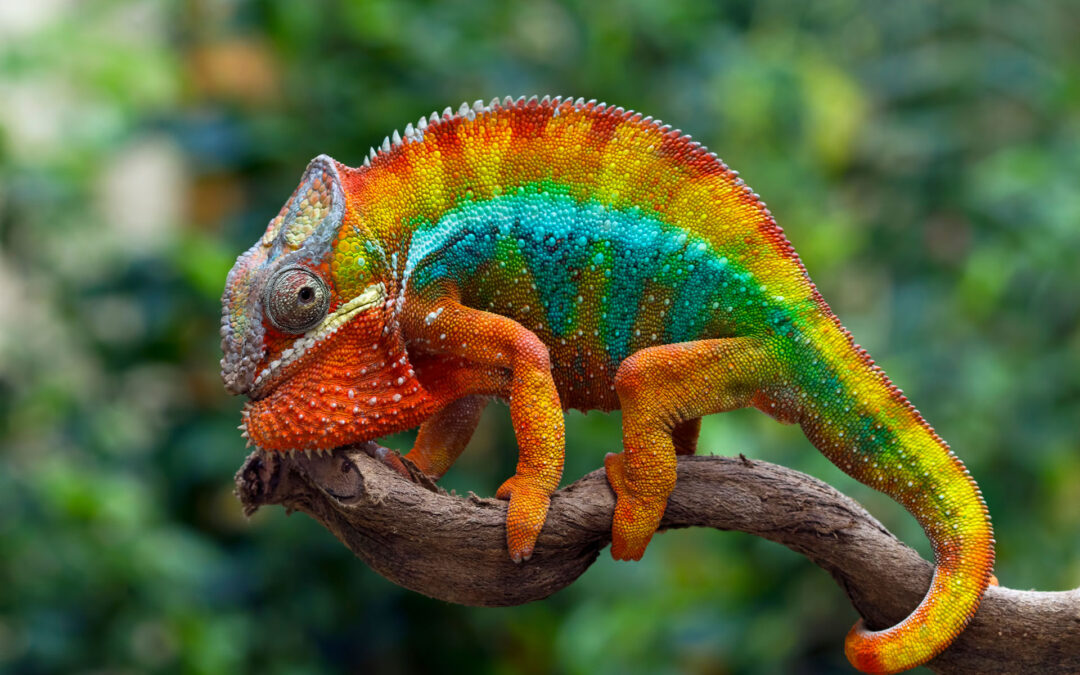
At Chameleons 101, we have a deep passion for all types of exotic reptiles, including Panther chameleons. These fascinating creatures are known for their unique ability to change color and blend in with their environment. One curious behavior that Panther Chameleons exhibit is puffing up their bodies. In this article, we’ll delve into the reasons behind this behavior and provide a comprehensive understanding of chameleon puffing.
Table of Contents
-
- Reasons for Panther Chameleons Puffing Up
- Defense Mechanism
- Territorial Behavior
- Courtship and Mating
- Stress and Fear
- How Panther Chameleons Puff Up
- Chameleon Health and Puffing
- Final Thoughts
Reasons for Panther Chameleons Puffing Up
There are several reasons why Panther Chameleons might puff up their bodies. These include defense, territorial behavior, courtship and mating, and stress or fear. Now we can discuss these items in more detail.
Defense Mechanism
Panther Chameleons are little reptiles, and in nature, they face many predators. Puffing up is a defense mechanism that makes them appear larger and more threatening to potential predators. By inflating their bodies, Panther Chameleons can discourage attackers and increase their chances of survival.
Territorial Behavior
Panther Chameleons can be quite territorial, especially when it comes to defending their space from other chameleons. Puffing up is a way for them to assert dominance and establish boundaries within their territory. Males, in particular, will often engage in this behavior when they encounter another male chameleon in their area.
Courtship and Mating
During the mating season, male Panther Chameleons will often puff up their bodies to attract females. This display is meant to show off their size and strength, making them more appealing to potential mates. Female Panther Chameleons may also puff up when they are not receptive to a male’s advances, signaling that they are not interested in mating.
Stress and Fear
Panther Chameleons can experience stress and fear just like any other animal. When they feel threatened or anxious, they may puff up as a way to cope with the situation. It is essential for chameleon owners to be aware of their pet’s stress levels and address any potential causes of anxiety.
How Panther Chameleons Puff Up
Panther Chameleons are able to puff up their bodies by taking in air and distributing it throughout their body cavity. This process is facilitated by their flexible ribs and skin, which can expand to accommodate the increased volume. Once the threat or stimulus has passed, the chameleon will gradually release the air and return to its normal size.
Panther Chameleon Health and Puffing
While puffing up is a natural behavior for chameleons, excessive puffing can be a sign of health issues or stress. If you notice that your chameleon is frequently puffing up, it is essential to assess its living conditions and consult a veterinarian experienced in reptile care.
Some factors that may contribute to excessive puffing include:
- Inadequate living conditions, such as an enclosure that is too small or lacks proper temperature and humidity levels.
- Poor diet, which can lead to malnutrition or obesity.
- Inappropriate or excessive handling can cause stress and anxiety for your chameleon.
- The presence of other Panther Chameleons or pets may trigger territorial behavior or fear responses.
- Health issues, such as respiratory infections, parasites, or other illnesses can cause discomfort and stress.
To maintain your chameleon’s health and well-being, it is crucial to provide a suitable environment, a balanced diet, and proper care. Regular visits to a reptile veterinarian can also help ensure that your chameleon remains in good health.
Final Thoughts
Understanding the reasons behind Panther Chameleon puffing up is essential for both chameleon enthusiasts and pet owners. By recognizing the different motivations behind this behavior, you can better interpret your chameleon’s needs and provide the best possible care.
Panther Chameleons are fascinating creatures with unique behaviors and adaptations. Puffing up is just one example of how these incredible animals have evolved to survive and thrive in their natural habitats. As a chameleon owner, it is your responsibility to create a comfortable and stress-free environment that allows your pet to exhibit these natural behaviors while staying healthy and happy.
