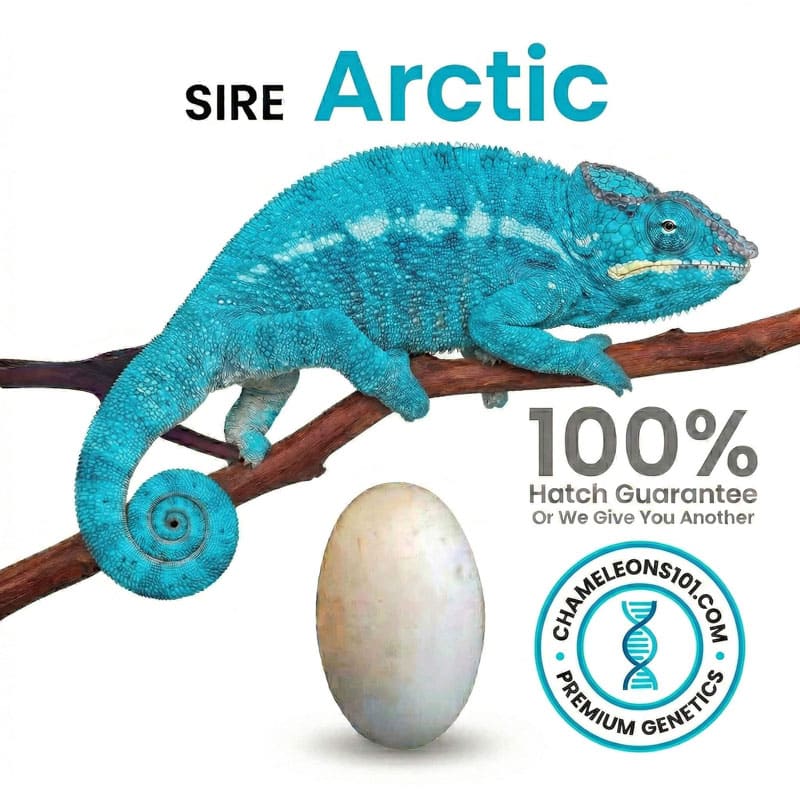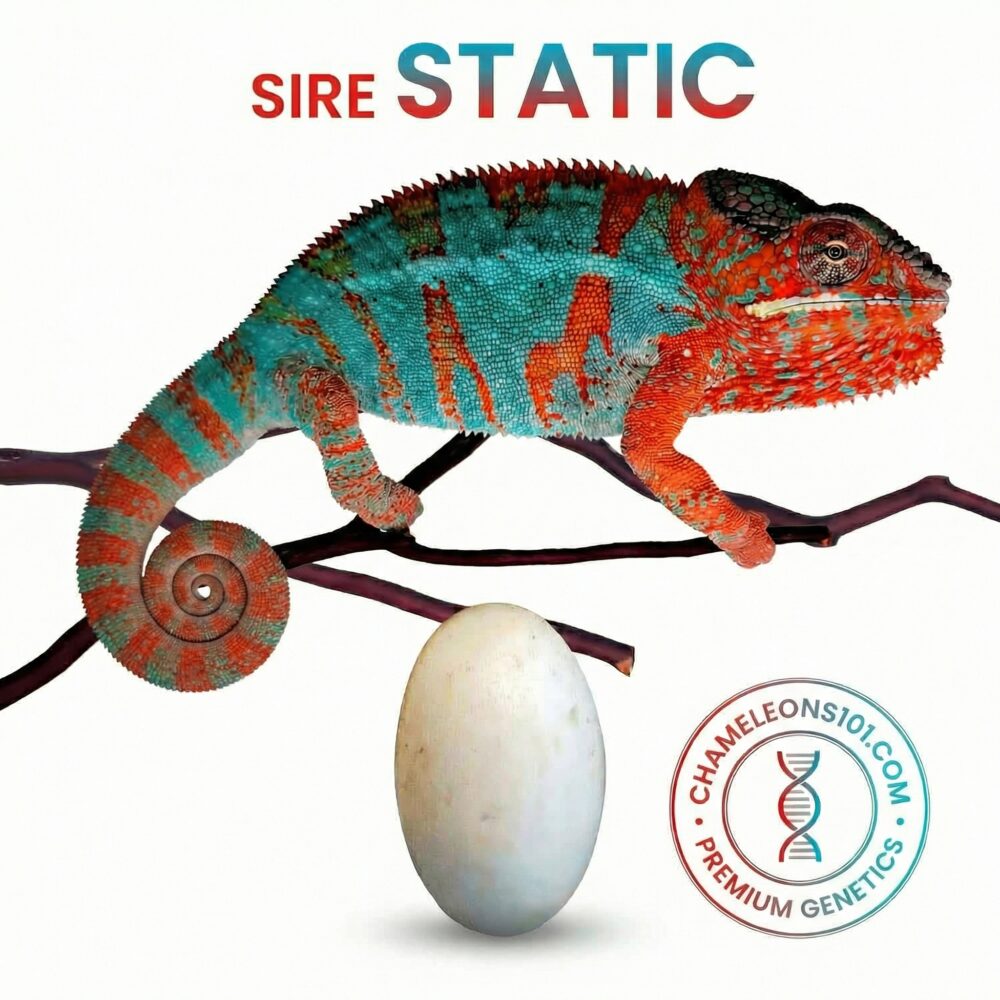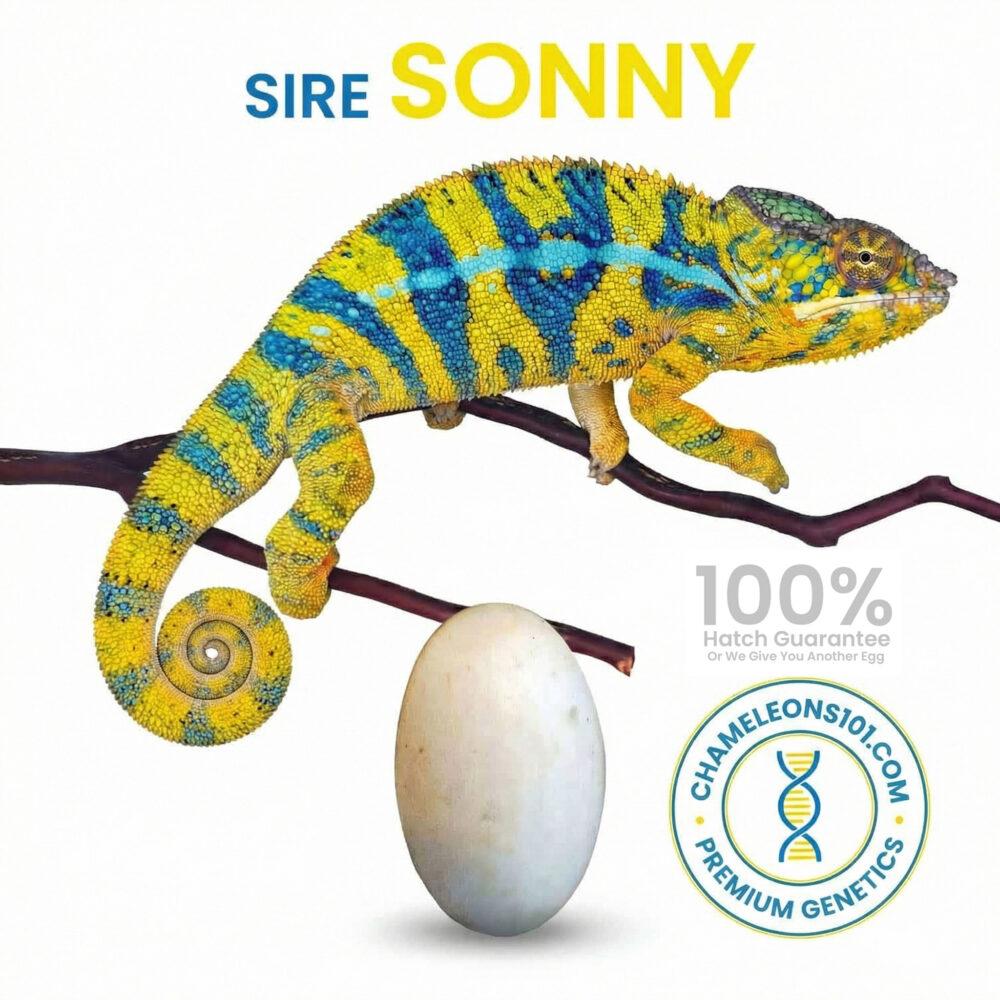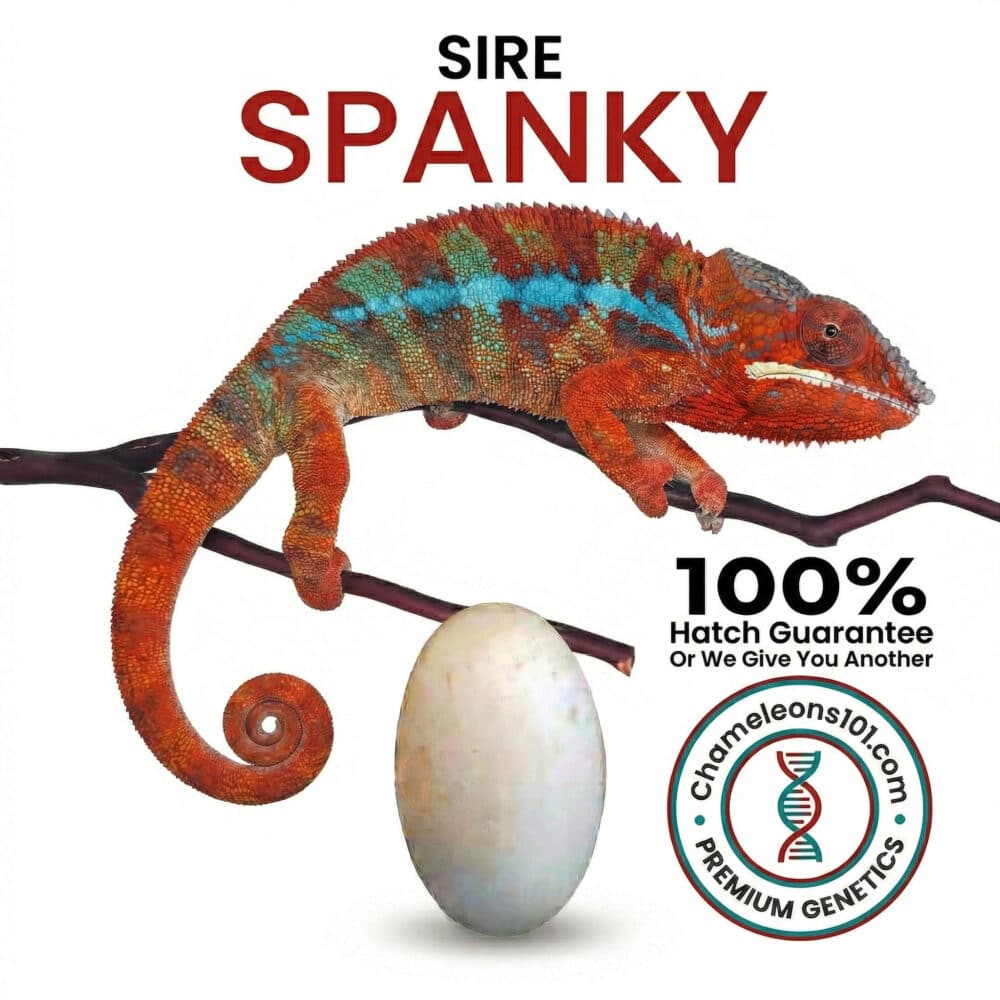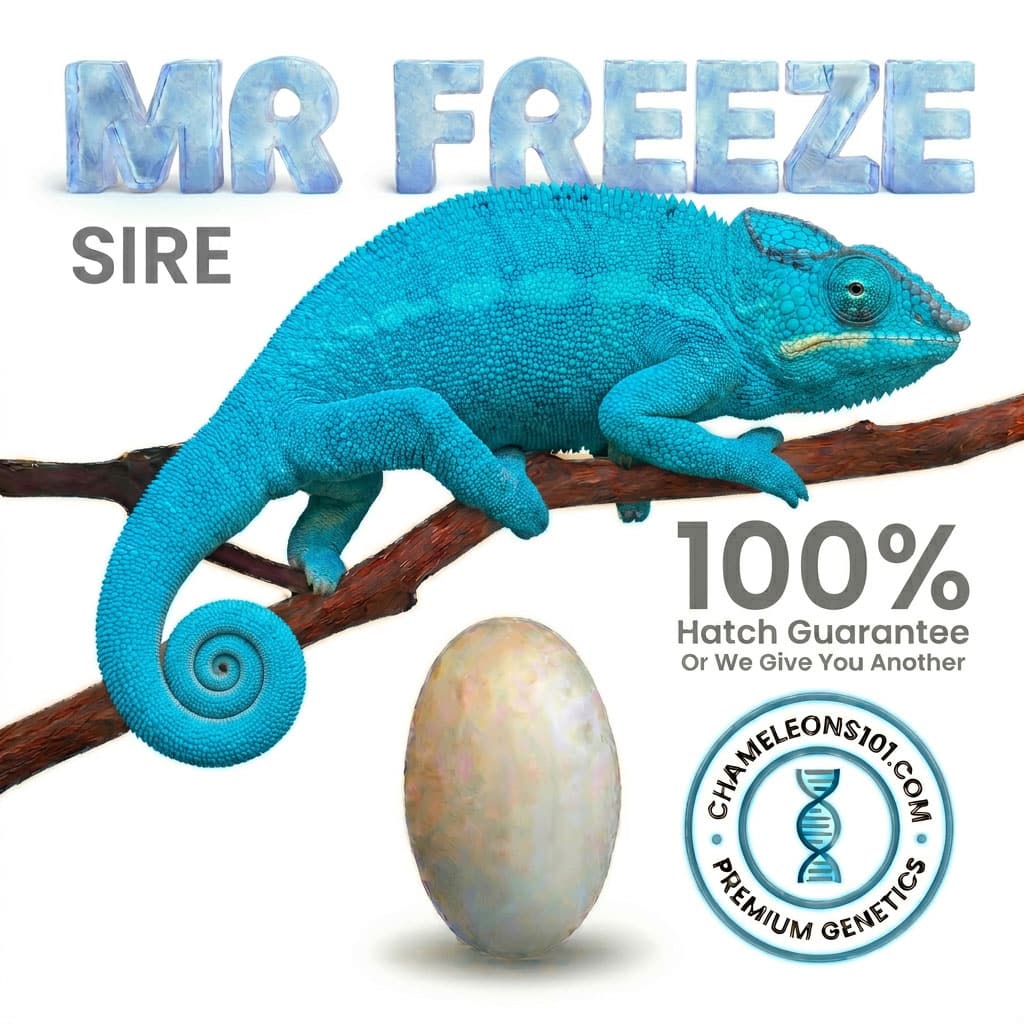


Premium Panther Chameleons (Furcifer pardalis)
Exclusively bred for vibrant color and personality by Chameleons 101.
The Four Areas of Successful Cage Setup
To honor our Live Animal Guarantee, your setup must mimic the Madagascar environment using these exact Chameleons 101 standards:
- Enclosure: We recommend a screen terrarium for maximum ventilation. For babies, a 16" x 16" x 30" (Medium) is ideal to help them find food easily. For adults, larger vertical spaces are required.
- Lighting (The Non-Negotiables):
- UVB: Use a T5 5.0 UVB Zoo Med Reptisun linear fluorescent (minimum 24 inches). Coil-type bulbs do not work and will result in poor health.
- Heat: Use a standard 25-watt to 40-watt incandescent appliance bulb in a dome fixture.
- Schedule: Run both lights on a timer for a 12-hour on / 12-hour off cycle (e.g., 7 am to 7 pm).
- Hydration Strategy: Panther Chameleons cannot drink from a bowl. Mist the cage down lightly two times in the morning (15 minutes apart) to create dew on the leaves. Total misting can occur 4–5 times a day. *Pro Tip: It is excellent for hydration to mist the cage while the chameleon is sleeping.
- Cleanliness: Daily floor cage (poop) cleaning is required to ensure a successful chameleon experience.
Egg Hatching Experience FAQ
Q: What is the typical incubation period for Nosy Be Panther Chameleon eggs
A: Panther chameleon eggs can have a lengthy incubation period, typically ranging from 6 to 12 months, sometimes longer, depending on precise environmental conditions.
Q: What are the ideal temperature and humidity requirements for incubation?
A: Maintaining the correct temperature and humidity is critical. Consistent temperatures typically between 68-78°F (20-26°C) and high humidity are often recommended for successful hatching.
Q: What does the "100% Hatch Guarantee" entail?
A: The "100% Hatch Guarantee" from Chameleons 101 provides assurance that your Nosy Be Panther Chameleon eggs are viable, provided that proper incubation and care conditions are met.
Q: What steps should I take immediately after the chameleon egg hatches?
A: Newly hatched chameleons are delicate. Ensure you have a properly set up enclosure ready, following the "Four Areas of Successful Cage Setup" guidelines, paying particular attention to appropriate lighting, hydration through misting, and temperature regulation.
Feeding & Diet
Panther Chameleons are insectivores. Follow the "Space Between the Eyes" rule: if the insect fits between the chameleon's eyes, they can swallow it.
- Hatchlings: Hydei fruit flies, Bean beetles, and pinhead to 2-week-old crickets.
- Adults: Crickets, Dubia roaches, Silkworms, and Hornworms.
- Note on Greens: While they can technically eat small amounts of fruits/veg, Chameleons 101 suggests you do not feed them plants, as their systems aren't designed for it.
P.C.D: Patience, Consistency, and Dedication
Building a bond takes time. Follow our 3-pillar method for a tame chameleon:
- Familiarize: Spend time near the cage talking in a soothing voice.
- Hand-Feeding: Let them recognize you as the source of food.
- The "Skewer Stick" Method: Use a stick as a bridge for the baby to climb on before moving to your hand.
10 Indicators of a Healthy Chameleon
Monitor these signs daily to ensure your pet is thriving:
| • Eyes are fully protruding (not sunken) | • Bright-colored, clean skin |
| • Strong grip and limb function | • Clear, well-formed white urates |
| • Active and alert behavior | • Shedding in large, uniform pieces |